

Why we choose the fibres we do

People ask what the pieces are made from more often than anything else. It depends on the piece, and on what is in the jars and tins that line my workroom: recycled sauce and coffee jars, and tins I have collected on my travels. They hold fibre I have been gathering since long before any of this was a business. Some of it came home from Switzerland, Italy and Spain. Some of it was my mother's. There is camel hair in there, flax fibre, nettle fibre, and alpaca blanket fibre that my friend at Cornstown House gave me, which I still have to build something amazing with.
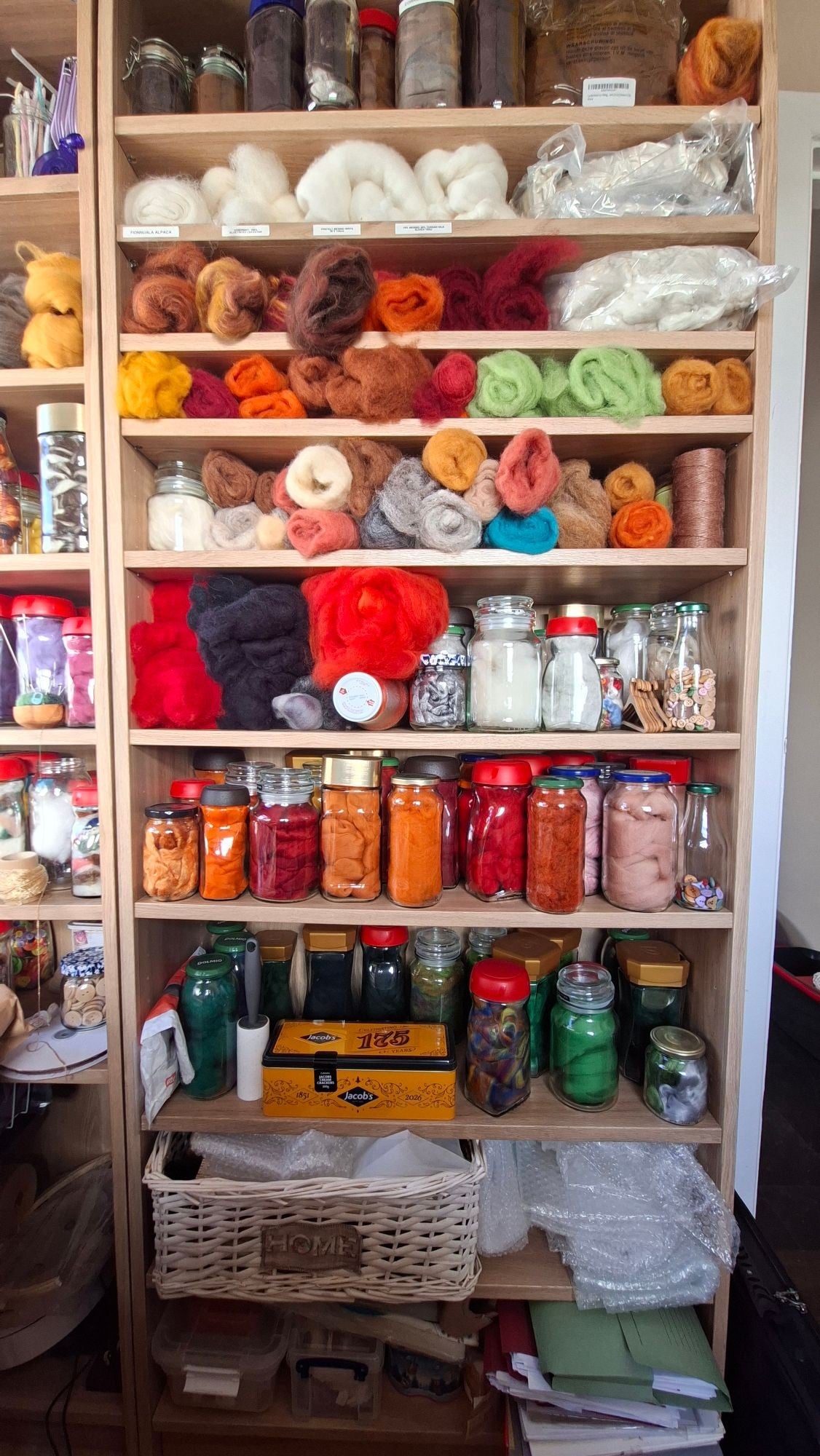
So the question is never what we use. It is what the piece has to do.
Knitwear usually means merino, or alpaca blended with wool, but not always. Sometimes a piece wants 100% wool, or cashmere, or something else entirely. Merino is fine enough not to prickle, it breathes, and it regulates temperature both ways. I use it fine for the baby pieces and bulky for hats, and it behaves the same either way. Alpaca is warm without weight, and it holds its shape rather than going baggy at the elbows.
The yarn I keep coming back to is 35% superfine alpaca and 65% Peruvian Highland wool. Both fibres are only washed, never chemically treated before dyeing, which is why the texture and the spring are still there in the finished piece. It carries Oeko-Tex Standard 100 certification in the class that covers what is worn against the skin, so it has been tested for harmful substances.
The Residents are knitted in that same yarn, bodies, dungarees and hats, because I have tried others and it is the one that behaves. Their cardigans are something else again, usually 100% wool, and there is a Donegal tweed on the needles at the moment to see how it knits up. Their accessories are felted rather than knitted. None of it is fixed. The clothes change with whatever suits the bear.
Inside, the stuffing is organic wool, certified to EN 71, the European toy safety standard.
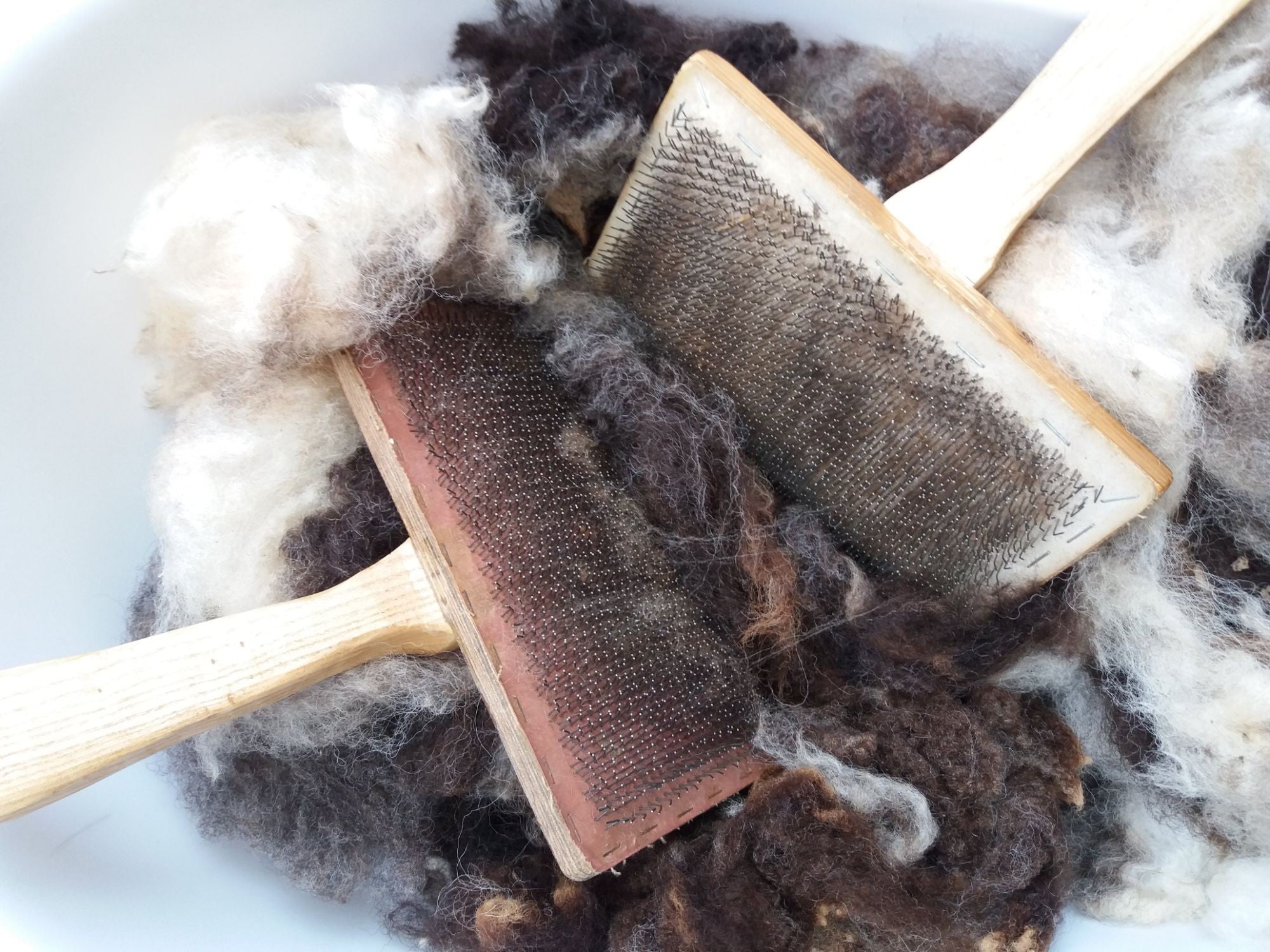
Fibre art is chosen for how it behaves under the needle and in the water. Some fibres hold a sharp line, some blur into each other, and a piece usually needs both. Some of my felting fibre comes from AppleOak FibreWorks in Co. Clare, whose wool is hand dyed in a workshop that employs women in fair conditions. That matters to me as much as the colour does.
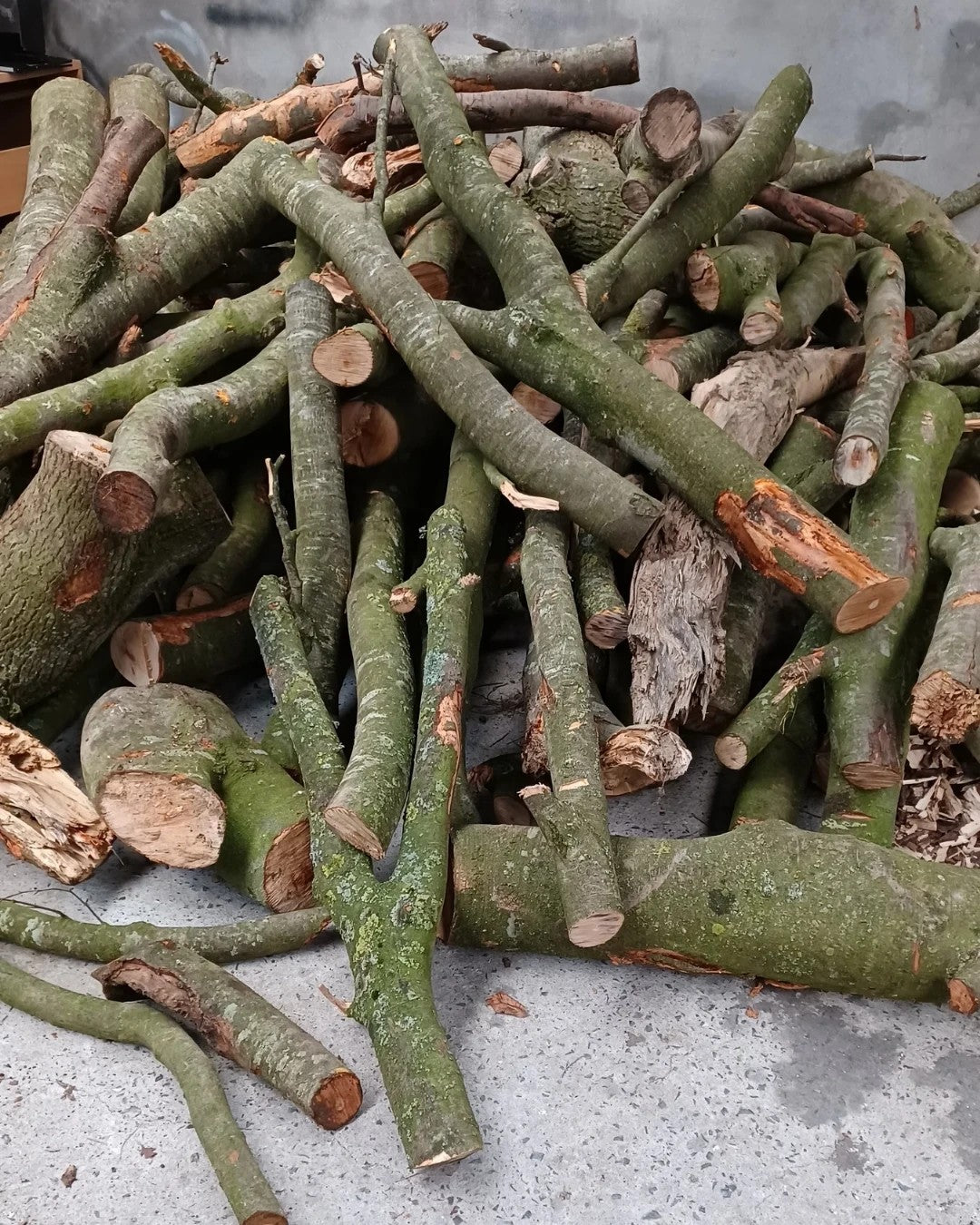
Joe's timber is yew and lime most often, with cherry and spalted beech, and branches that have come down in Pebblewood itself.
And the one we leave out. Acrylic is cheaper. It is not easier to knit, and the quality is diminished. I am not a fan. My pieces are handknitted to be outgrown, not worn out, and the fibres are most of the reason why.
What all of it has in common is fibre left as close to itself as possible, washed rather than treated. We try to give everything a second chance. The jars and tins included.
You can see the knitwear, the fibre art, the Residents and Joe's woodcraft in the shop.